Quick Answer: Coaches want a 3–5 minute reel with the player clearly identified (arrow or circle) and the best clips in the first 30 seconds, hard cuts with no music or effects, a wide stable frame that shows off-ball play, position-specific variety, and a link to a full unedited match. What gets reels skipped: buried best clips, tight zoom, music, and no full-game backup.
Recruiting organizations like NCSA publish detailed video guidelines, and college coaches repeat strikingly consistent advice in interviews and clinics: they are not judging your editing, they are trying to evaluate a player as fast as possible. Everything below follows from that single fact.
The Non-Negotiables
- 3–5 minutes. Longer reels do not get more evaluation; they get less, because coaches move on.
- Best 30 seconds first. Coaches decide early whether to keep watching. Your strongest three or four plays open the video — not a slow build.
- Identify the player in every clip. An arrow, circle or spotlight freeze before play resumes. If a coach has to guess which of the 22 players you are, the clip is wasted.
- Opening card with the facts: name, position, graduation year, height, dominant foot, team and jersey number, contact email. Coaches sort hundreds of players; make filing you away effortless.
- A link to full, unedited match footage. The reel earns interest; the full game earns the offer. Every recruiting advisor repeats this: highlights can flatter, a full match cannot.
What the Frame Must Show
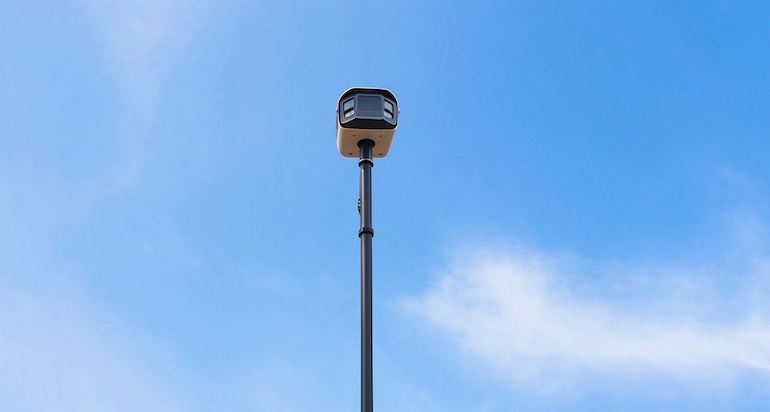
The single most common technical failure in recruiting videos is a frame that is too tight. Coaches evaluate decision-making and movement, not just touches: they want to see what your player does before receiving, where teammates and defenders are, and what options existed. That requires a wide, stable, ideally elevated frame from the halfway line — the kind produced by a tripod or an auto-tracking camera. If the footage only shows your child when the ball is at their feet, it cannot answer the questions coaches are actually asking. Full-pitch panoramic recordings are particularly useful here, because a per-player clip can be cut showing a run or defensive recovery that a ball-following lens never framed.
Position-by-Position Clip Checklist
- Forwards / wingers: finishing with both feet, headed finishes, 1v1 beating a defender, runs in behind, combination play in the final third, pressing triggers.
- Midfielders: short and long passing range, receiving on the half-turn under pressure, switching the point of attack, line-breaking passes, defensive recovery runs and second-ball wins.
- Defenders: clean tackling, aerial duels won, 1v1 defending (patient, not diving in), recovery pace, distribution out of the back, organizing teammates.
- Goalkeepers: shot-stopping at multiple heights, crosses claimed under pressure, 1v1 situations, distribution accuracy with hands and feet, communication and organizing the back line.
Whatever the position: include off-ball clips. A forward's curved run that creates space for a teammate, a midfielder's scanning before receiving, a defender's recovery angle — coaches explicitly cite these as differentiators, and they are exactly what tight phone footage never captures.
What Gets Reels Skipped
- Music, slow motion and transitions (coaches routinely say they mute or close these)
- Six-plus minutes, or the best clips saved for a "big finish" the coach never reaches
- No player identification, or identification placed after the action starts
- Ground-level, shaky, over-zoomed phone footage
- All clips against obviously overmatched opponents, with no indication of the level
- No full-match link — to many coaches, this reads as "the highlights are hiding something"
Frequently Asked Questions
What do college soccer coaches look for first in a highlight video?
Whether the player is clearly identified within the first seconds, and whether the opening 30 seconds contain genuinely strong plays at a competitive level. Coaches watch dozens of reels; they decide quickly. An opening card with name, position, graduation year and jersey number, followed immediately by your best clips, is the standard they respond to.
What clips should each position include in a soccer highlight video?
Forwards: finishing with both feet, heading, 1v1s, runs in behind. Midfielders: range of passing, receiving under pressure, switching play, defensive recovery. Defenders: tackling, aerial duels, 1v1 defending, distribution from the back. Goalkeepers: shot-stopping, crosses claimed, distribution, organizing the defense. Every position benefits from off-ball clips showing movement and decision-making.
What are the biggest mistakes in soccer recruiting videos?
The most common are: videos longer than 5-6 minutes, best clips buried in the middle, music and effects, no player identification, footage zoomed so tight that off-ball play is invisible, clips against weak opposition with no context, and no link to a full unedited match.
Do coaches care about video quality?
They care about evaluability rather than production value. Stable, wide, elevated footage from the halfway line at 1080p is ideal. Shaky, tight, ground-level phone footage makes a good player hard to evaluate; clean wide footage from an auto-tracking or panoramic camera is enough. No coach has ever recruited a player because the reel had better transitions.
Sources
- NCSA College Recruiting — published highlight-video guidelines and coach survey insights
- NCAA — recruiting calendars and contact rules
- United Soccer Coaches — player evaluation resources
- OWLREC official website — 180° panoramic recording and per-player clip generation referenced above
Further reading on this site: how to record games for recruiting highlights and filming your kid's game without holding a phone.